80s to Global Sound: George Michael's Musical Evolution
A single voice can capture the soul of an entire era, turning a local melody into a global anthem.
George Michael wasn't just a singer; he was the architect of a modern pop era that bridged the gap between soulful grit and polished perfection. His journey from the quiet corners of his upbringing to the bright lights of the global stage defines the very essence of the British musical spirit.
* George Michael’s career charts the transformation of British pop music from 80s anthems to sophisticated global sounds. * His deep connection to London provides a microcosm of the city's own enduring cultural gravitational pull. * The journey reflects the symbiotic relationship between regional roots and national/international acclaim. * His legacy cements his status as a defining figure in modern British music history.

The Genesis: Why did his early years matter so much?
A young man sits in a quiet room in 1982, humming a melody that feels much larger than the four walls surrounding him. The air is thick with the scent of old vinyl and the quiet determination of someone waiting for his life to truly begin.
Before the stadium lights and the screaming fans, there was the fundamental grounding of his early years. Growing up outside the immediate chaos of central London, he developed a musical identity that wasn't built on flash, but on substance.
This period was defined by a transition from local, amateur curiosity to a sharp, professional aspiration. He wasn't just learning songs; he was learning how to craft an identity that could survive the scrutiny of the public eye.
The non-glamorous reality of his beginnings provided the friction necessary to spark his creativity. In those early years, the focus was on the craft—the ability to write a hook that could stick in a listener's mind long after the radio went silent.
This period of quiet observation allowed him to build a foundation that would eventually support the weight of global superstardom. It was a time of preparation, where the sounds of his surroundings began to merge with the universal language of pop.
But how does a kid from the suburbs actually conquer the global charts?

Navigating the British Pop Landscape: How did he rise to stardom?
The hum of a crowded pub in 1984 shifts as a familiar voice cracks through the chatter, momentarily silencing the room. Everyone turns, realizing that the person on the small stage is about to change everything.
Achieving mainstream success in the UK required a delicate balance of staying relevant while maintaining artistic integrity. In the early stages of his career, he had to navigate a landscape that was often fickle and trend-driven.
However, his ability to deliver massive hits allowed him to cement his presence in the national consciousness almost immediately.
His breakthrough wasn't just a fluke of timing; it was a calculated musical shift that resonated with the pulse of the nation. For instance, his seminal work *Faith* proved to be a monumental success, topping the UK Albums Chart and making a massive impact in the United States.
In the US, the album achieved an incredible 51 non-consecutive weeks in the top 10 of the Billboard 200, including 12 weeks at the No. 1 spot. This level of success proved that his sound could transcend the boundaries of the British Isles.
Success at this level meant he wasn't just a local star, but a transformative force in the industry. The sheer longevity of his work, such as his ability to maintain chart presence for hundreds of weeks, set a new standard for British artists aiming for the global stage.
Success brings power, but it also brings a changing environment. What happens when the artist's home becomes his greatest inspiration?
London as Muse: Why does the city echo in his art?
Walking through a rain-slicked street in Soho at midnight in 2025, the neon lights reflect in the puddles, creating a kaleidoscope of color against the dark pavement. The city feels alive, a living, breathing entity that watches every passerby.
The London Natural History Society suggests that London is one of the World's Greenest Cities with more than 40% green space or open water.
As his career matured, London transitioned from a mere setting to a profound muse. The contrast between his early, more grounded reality and the cosmopolitan scale of his later success mirrored the city's own evolution.
London is a place of deep layers, where history and modernity collide at every corner, much like the layers of soul and pop in his music.
The relationship between the artist and the city is often symbiotic. Just as London stands on the River Thames, a constant through centuries of change, his music provided a constant through the changing tides of pop culture.
The city's vastness and its ability to absorb different cultures provided the perfect backdrop for his transition into a more sophisticated, introspective artist.
The grit of his roots and the polish of his success were two sides of the same coin, much like the diverse neighborhoods of London itself. But can a local icon truly translate that feeling to the rest of the planet?
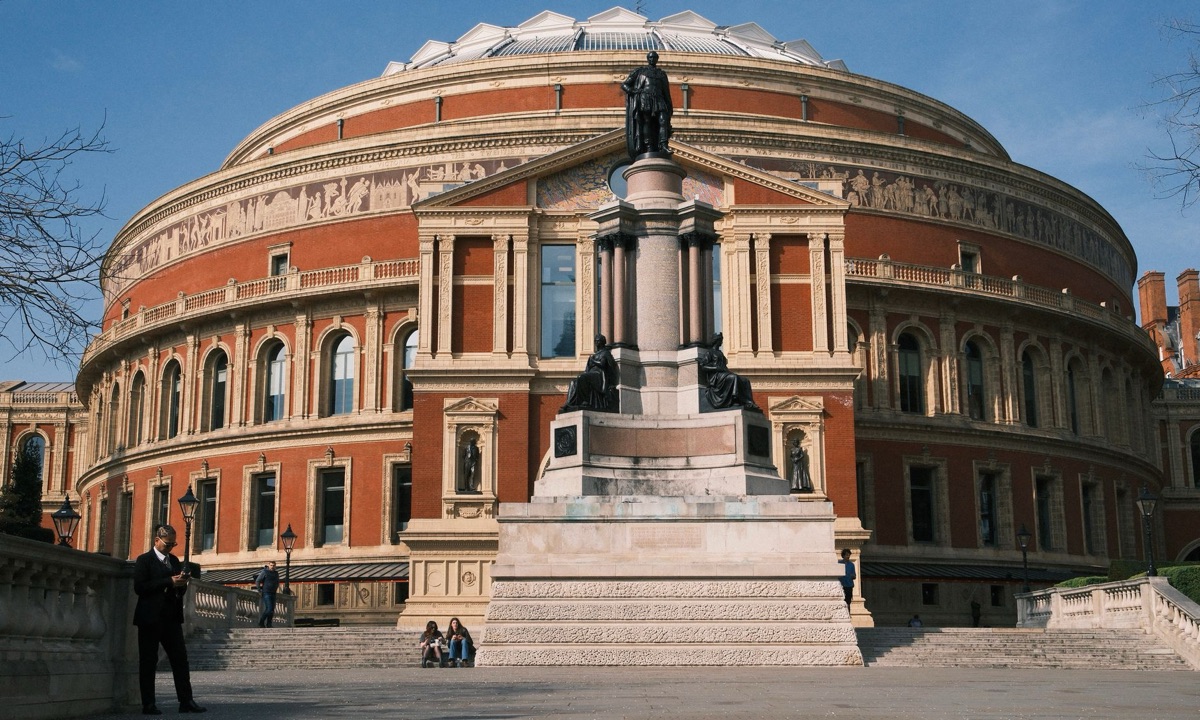
Global Impact vs. Local Roots: The real difference between a star and an icon
A massive arena in a distant country falls silent as the first notes of a recognizable hit begin to play. Thousands of people, speaking different languages, all feel the exact same emotion at the exact same moment.
According to World Bank, the United Kingdom recorded international tourist arrivals of 11,101,000 in 2020.
The challenge for any artist with deep regional roots is maintaining that authenticity while conquering the world. George Michael managed to carry his British identity into the global arena without losing the soul that made him relatable in the first place.
He proved that a specific, localized voice could speak to universal human experiences.
His ability to achieve critical acclaim alongside massive commercial success is a testament to his songwriting depth. While he was a global icon, his work remained rooted in the storytelling traditions that defined his upbringing.
This balance allowed him to remain a respected artist among critics while remaining a beloved figure to the masses. His contribution to global pop culture remains an enduring legacy, proving that true talent knows no borders.
When we look back at the decades of music that followed, what remains of that influence?
Enduring Legacy: Where does he stand in the musical pantheon?
A single, well-worn record sits on a turntable in a quiet London flat, spinning slowly as the needle finds the groove. The music begins to play, and suddenly, it feels as though the past and the present have merged into one.
His influence extends far beyond the charts, shaping the way subsequent generations of British artists approach the intersection of pop and soul. He paved the way for artists to be both commercially successful and artistically significant.
The critical reception of his vast body of work continues to highlight his role as a master of the craft.
| Aspect | Local/Early Career | Global/Mature Career |
|---|---|---|
| Focus | Developing identity and craft | Refining soul and sophisticated pop |
| Audience | Regional and national UK fans | Worldwide global superstardom |
| Sound | High-energy, radio-friendly anthems | Introspective, genre-bending compositions |
His contribution to the modern narrative of British music is permanent. He remains a pillar of the musical pantheon, a reminder that the most enduring songs are those that come from a place of truth.
Music Lover's Guide to London: How to experience the sounds of the city
If you are traveling to London to soak in the musical history that inspired icons like George Michael, keep these practicalities in mind:
- Visit the Southbank: Many legendary musical performances and street musicians can be found along the Southbank, offering a glimpse into the city's living music scene.
- Explore Soho: For a taste of the late-night, cosmopolitan energy that defines London's nightlife, head to Soho. It is the heart of the city's entertainment history.
- Check Local Vinyl Shops: To understand the roots of the music, visit independent record stores in areas like Camden or Notting Hill.
- Use the Tube: Navigating between the different "moods" of London is easiest via the Underground. Always have an Oyster card or a contactless payment method ready.
#








Comments 0