From Southwark Streets to Cosmos: The Pullman Pilgrimage
"The architecture of a story is often built from the very stones of the city that birthed it."
To understand the profound depth of Philip Pullman’s worlds, one must look beyond the mere magic of talking animals and cosmic dust to see the shadow of a city that has stood for two millennia.
His work is not just a collection of adventures; it is a dialogue with the weight of history, the tension of authority, and the vast, sprawling complexity of the human spirit.
* The tension between ancient tradition and radical change serves as the heartbeat of both Pullman’s prose and London’s history. * The "London Imagination" acts as a hidden engine, where the city's layers of history fuel the vastness of high-concept fantasy. * Intellectual rebellion and the pursuit of truth are the threads that connect Victorian-era sensibilities to modern cosmic quests.

Why Does Pullman’s Fantasy Echo the British Psyche?
A heavy, grey morning in Southwark, where the smell of damp pavement meets the scent of old stone, sets a mood that feels both ancient and immediate. In the early hours of a Tuesday in 2025, I stood near the old docks, feeling the weight of centuries in the very air.
Walking through these streets, you realize that the city itself is a palimpsest—a surface that has been written on, erased, and rewritten for generations. This constant tension between the old and the new is the fundamental engine of Pullman’s storytelling.
In his epics, characters often grapple with the crushing weight of established institutions—the "Authority"—while simultaneously striving for a radical, often dangerous, freedom.
This mirrors the historical reality of a nation that prides itself on deep-rooted traditions, such as the monarchy and the ancient universities, while being a primary driver of revolutionary change and industrial upheaval.
The setting in such stories often feels both claustrophobic and infinite, much like the geography of a massive metropolis.
Just as a traveler might feel lost in the winding, narrow alleys of a historic district only to emerge into a vast, open plaza, Pullman’s characters navigate tight moral dilemmas that explode into cosmic scales.
The quest narrative—the pilgrimage toward a truth that changes everything—is a staple of British literature, from the Arthurian legends to the Victorian novels that paved the way for modern fantasy.
But how does a city so grounded in the physical world inspire such vast, metaphysical journeys?

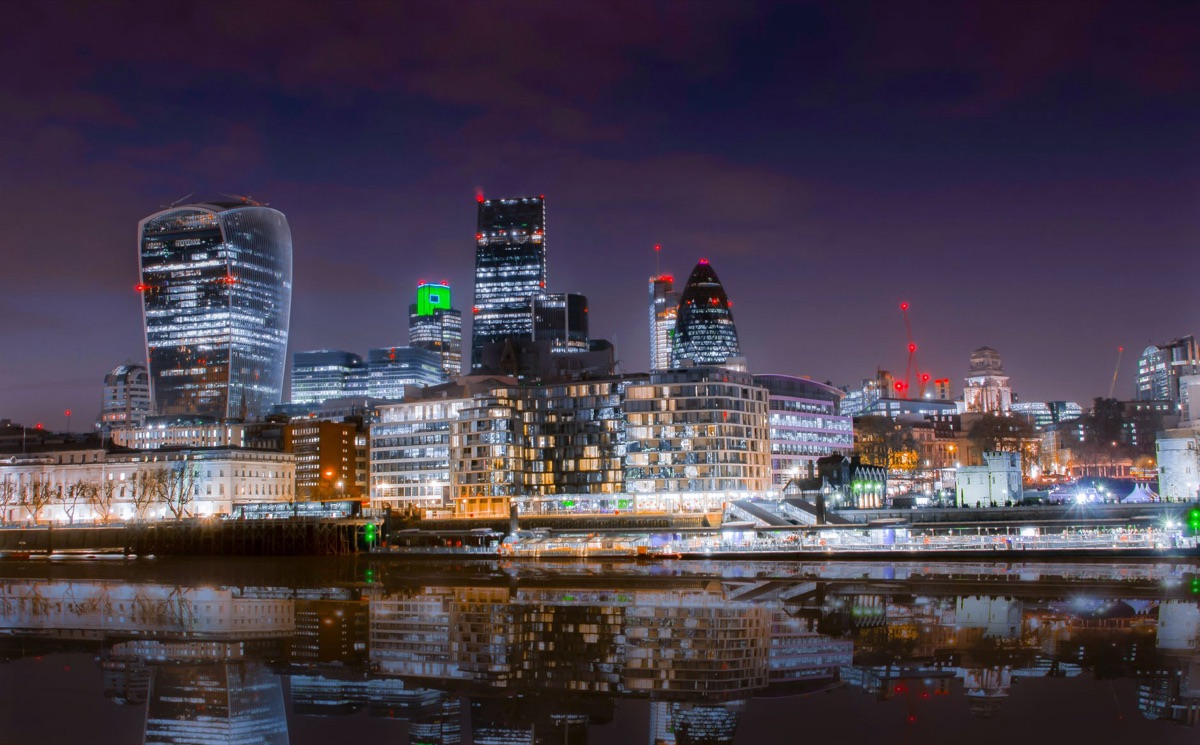
What lies beyond the typical London tourist experience? Standing on the South Bank as the sun sets, you watch the Thames flow toward the North Sea, a tidal estuary that has been the lifeblood of a major settlement for nearly 2,000 years. The water moves with a heavy, purposeful rhythm, much like the passage of time in a great civilization.
The London Natural History Society suggests that London is "one of the World's Greenest Cities" with more than 40% green space or open water, 2,000 species of flowering plant, and 120 species of fish.
In 2026, as urban density continues to rise, these pockets of nature remain vital to the city's identity.
To understand the "London Imagination," one must look past the postcards of Big Ben and toward the city as a living protagonist. London is not just a setting; it is a presence.
It is a place of deep, hidden layers—subterranean tube networks, forgotten cellars, and archaeological strata that exist beneath the modern pavement. This duality of the visible city and the hidden underworld provides a perfect template for the "world-within-a-world" mechanics found in high fantasy.
The city has always been in a state of transition, from the industrial sprawl of the 19th century to the global hub of today. This constant flux creates a narrative driver: the idea that the world we see is only a thin veneer over something much older and more complex.
Writers like Pullman tap into this feeling, using the vastness of their fictional worlds to evoke the same sense of awe and intimidation one feels when standing in the shadow of a cathedral or a skyscraper.
However, the physical city is only half the story; the intellectual weight of its history provides the other.
How do faith, knowledge, and rebellion connect? A quiet corner in a Bloomsbury bookshop, surrounded by the smell of aging paper and the soft hum of intellectual debate, offers a sanctuary for thought.
In the quiet of a 2025 afternoon, I sat in a corner booth, watching the light shift across leather-bound spines, feeling the weight of the ideas held within.
Pullman’s work often centers on the conflict between institutional dogma and the individual's search for truth. This is a deeply British intellectual tradition—the spirit of dissent that flourished during the Enlightenment and continues in the halls of Oxford and Cambridge.
His protagonists are often outsiders or rebels who must challenge a rigid, all-encompassing authority to discover a fundamental truth about the universe.
This pursuit of knowledge is not merely a plot device; it is a reflection of a culture that values empirical observation and scientific inquiry.
The high stakes of his characters' journeys—where the fate of souls or entire worlds hangs in the balance—echo the profound responsibility of seeking truth in a world of misinformation.
It is a reminder that the most important battles are often fought in the margins of society, where the old rules no longer apply.
But how does this transition from the local to the cosmic actually work in practice?
The Literary Lineage: From Fog to Cosmology
The transition from a foggy, Victorian streetlamp to the blinding light of a cosmic revelation is a leap that feels both sudden and inevitable. It is the transition from the Gothic to the Sublime.
The lineage of British literature is a continuous thread of atmospheric storytelling. From the dark, melancholic elements of the Gothic tradition to the sprawling, philosophical depth of modern fantasy, there is a shared preoccupation with the "feeling" of place.
Writers have always used the damp, vast, and layered atmosphere of the British landscape to explore the internal landscapes of the human heart.
Pullman modernizes these ancient struggles by scaling them up to a cosmic level. He takes the traditional elements of myth—the hero's journey, the loss of innocence, the battle between light and dark—and applies them to a setting that feels as vast as the expanding universe.
This is the modernization of myth: using the tools of contemporary storytelling to address timeless human questions.
Yet, for the modern traveler, these themes are not just abstract concepts; they are experienced through movement.
The Modern Pilgrimage: A Contemporary Echo
A traveler sitting on a red double-decker bus, watching the city blur past through a rain-streaked window, finds themselves caught between the movement of the present and the stillness of the past. It is a moment of transition, a small-scale pilgrimage through the urban landscape.
According to World Bank data, the United Kingdom recorded international tourist arrivals of 11,101,000 in 2020. In the current era of 2026, the scale of global movement has shifted again, but the desire to touch history remains constant. In the modern era, the "quest" has changed.
It is no longer always about a physical journey to a distant land, but often a psychological or intellectual journey through a complex, interconnected world.
The protagonist as an outsider—the observer who sees what others miss—remains a vital archetype. This figure acts as the necessary agent of change, much like the traveler who enters a great city to be transformed by its scale.
The synthesis of these elements—the historical weight, the urban complexity, and the philosophical depth—is what makes the literature of this tradition so enduring.
| Feature | Classical Fantasy | Pullman-esque Fantasy |
|---|---|---|
| Primary Conflict | Good vs. Evil | Authority vs. Individual Truth |
| Setting Scale | Secondary to Magic | Integral to the Narrative |
| Tone | Often Escapist | Intellectual & Philosophical |
| Core Theme | Heroic Triumph | The Cost of Knowledge |
How to Navigate the Literary Landscape
If you are traveling to London to soak in the atmosphere that inspires such profound works, follow this structured approach to your exploration:
- Immerse in the Archives: Spend your first morning at the British Museum or the Natural History Museum. These institutions provide the physical context of the history that fuels the "London Imagination."
- 2.s Walk the Historical Axis: Travel from the South Bank toward Tower Bridge. This walk allows you to physically experience the transition from modern reconstruction to ancient riverside paths.
- Engage with Intellectual Hubs: Take a train to Oxford. The relationship between the city's architecture and its academic history provides a direct link to the intellectual settings of many great English novels.
- Utilize Subterranean Transit: Use the London Underground to move through the city. It is the most direct way to experience the "hidden layers" of the urban environment.
FAQ
Is it necessary to have read the books to appreciate the setting? Not at all. The atmosphere of a place is a sensory experience that exists independently of the literature written about it, though understanding the themes can deepen your appreciation.
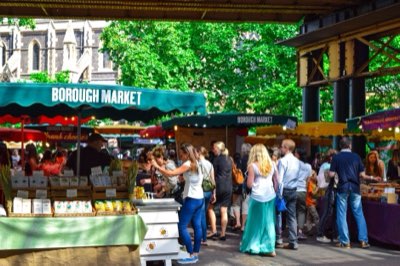
How much time should I dedicate to "literary" sightseeing? If you are interested in the deep history of London, setting aside at least one full day for walking tours in historic districts like Bloomsbury or Southwark is highly recommended.
Are these locations safe for solo travelers? London is generally a very safe city for travelers, including those exploring on foot. However, always remain aware of your surroundings, especially in crowded or late-night transit areas.




Comments 0