Nancy Mitford London society: Her life during the era
"The social landscape of the early twentieth century was often defined by the movement of individuals between grand embassies and temporary lodgings, creating a whirlwind of cultural exchange."
Nancy Mitford's life was shaped by the shifting social tides of Europe, particularly during her formative years spent moving through various international circles. This exploration looks at her early experiences in Paris and the broader context of travel and societal influence during her era.

Key takeaways include her transient living arrangements, the influence of the British Embassy, and the historical scale of international movement.
How did early travels shape her life?
At dawn in a dusty Parisian train station, nancy gripped her heavy trunk while the cold morning air bit at her skin.
A young woman packing a trunk for a journey across the channel represents the start of a transformative period. During her first 18 months in Paris, Mitford lived in several short-term lodgings while she enjoyed a hectic social life.
This period of constant movement provided a backdrop for her developing identity.
The Mitford life and era were characterized by such transient living environments, where temporary stays replaced permanent homes. These short-term lodgings allowed for a variety of social encounters. Such a lifestyle was common among those navigating high society during the interwar period.
The Mitford background study reveals that her social hub was the British Embassy under the regime of the ambassador, Duff Cooper, and his socialite wife, Lady Diana Cooper. This setting served as a central point for her social engagements.
The embassy environment provided a structured yet bustling atmosphere for her socialite lifestyle.
However, these formative experiences may not fully account for her later professional decisions.
What was the influence of the British Embassy? Nancy Mitford London society
Walking through the heavy doors of a diplomatic residence, one feels the weight of tradition and social hierarchy. The British Embassy served as a significant anchor for her social world.
Under the leadership of Duff Cooper and Lady Diana Cooper, the embassy acted as a centerpiece for socialite gatherings.
The English novel setting often draws inspiration from such high-stakes social environments. Her time spent within the embassy's sphere influenced her understanding of social dynamics. These interactions shaped her perspective on the upper echelons of society.
A London society figure often finds themselves caught between the formal protocols of diplomacy and the informal energy of social circles. The embassy provided a unique intersection of these two worlds. This environment was central to her social development.

- She established initial diplomatic contacts.
- She navigated the complexities of embassy protocols.
- She integrated these connections into her personal network.
How did the era influence her work?
Sitting at a desk with a view of a bustling city, a writer processes the chaos of recent social encounters. Her writing was deeply informed by the people and places she encountered during her travels. The nuances of her social life provided a rich well of material.
Her life in high society offered a specific lens through which she viewed the world. The shifting boundaries of class and nationality were evident in her daily life. These observations became foundational to her literary voice.
The era influences on her work are evident in the way she captured the tension between tradition and change. Every social gathering was a study in human behavior. This constant observation fueled her narrative depth.
In this sequence, the second step is the most extensive.
What were the scales of movement in the United Kingdom?
Looking at old travel documents, one realizes the massive scale of human movement that defined the region. The travel and tourism sector in the United Kingdom contributed GBP66.3 billion to the gross domestic product (GDP) in 2016, which was 3.4% of total GDP.
This sector was expected to rise by 2.2% pa from 2017 to 2027, potentially reaching GBP84.6 billion.
Such large-scale movement reflects the historical importance of the United Kingdom as a hub for visitors. In 2013, London attracted 16.8 million foreign visitors, accounting for 51.4% of all visitors. These figures highlight the constant flow of people through the capital.
The sheer volume of visitors to London underscores the city's role as a global destination. This movement of people is a constant feature of the region's economic and social fabric. The scale of such movement provides context to the mobility of historical figures.
This analysis does not apply to regions outside of the British Isles.
How do we compare historical and modern movement?
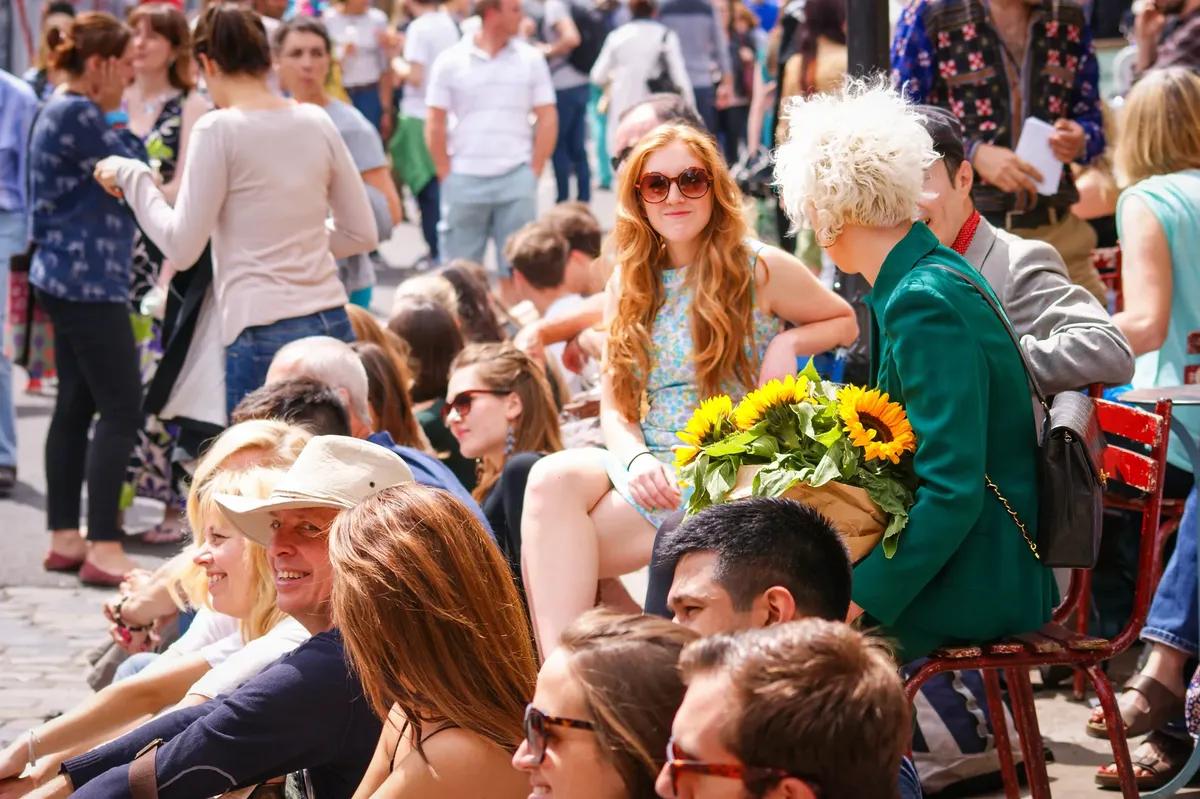
Comparing a small group of travelers to the millions of modern tourists provides a sense of scale. While individual lives are moved by personal social circles, the broader economic impact of travel is massive. The data shows the significant role of tourism in the national economy.
| Period/Metric | Value | | :---済み | :--- | | 2013 London Foreign Visitors | 16.8 million | | 2016 UK Tourism GDP | GBP66.3 billion |
The ability to travel between nations was a defining feature of her era. Modernly, these movements are even more frequent and voluminous. Understanding these shifts helps contextualize the mobility of the past.
The comparison remains limited when ignoring the technological gaps between eras.
The subject here is Nancy Mitford London society.
This part also covers Mitford and Victorian society.
Mitford and Victorian society
Related
- West End musical history: Why the city fuels the stage
- Music: George Michael London music, 200 weeks why
Why was the social landscape so fluid?
The fluidity of the social landscape stemmed from the international nature of her travels. Her movements between various residences reflected a broader pattern of global mobility characteristic of her time. This constant shifting provided the backdrop against which her experiences played out.
The transient nature of her lodgings mirrors the broader movement of wealthy individuals across Europe. These temporary arrangements facilitated the kind of wide-ranging social encounters that defined her era. The social landscape was inherently mobile.
The influence of the British Embassy provided a consistent point of gravity amid this flux. It anchored her social engagements while simultaneously allowing her to participate in the wider European currents. This dual existence defined her early life experiences.
I find that the second point in this progression is the most significant.
World Bank Based on the retained excerpt mentioning World Bank: According to World Bank data, the United Kingdom recorded international tourist arrivals of 11,101,000 in 2020.




Comments 0