Cotswolds history tour: Etymology of the name Cotswold
"The term itself carries the echoes of the 12th century, a linguistic remnant of an ancient landscape."
A day trip to the Cotswolds offers a window into English heritage through rolling hills and ancient etymology. This guide explores the historical roots of the region and the significance of its vast landscape for travelers.

You will learn about the origins of the name, the scale of the area, and how to navigate its historic trails.
Where did the name 'Cotswolds' actually come from? Walking through the mist-covered hills feels like stepping into a living history book. The name itself provides a direct link to the medieval period.
For many years, the English Place-Name Society has accepted that the term Cotswold is derived from Codesuualt of the 12th century or other variations on this form.
The etymology of this term is "Cod's-wold," which translates to "Cod's high open land." This linguistic connection grounds the modern landscape in its ancient identity.
How large is the Cotswolds region?
Standing atop the peak at sunrise, I squinted against the bright light while surveying the vast expanse of the Cotswolds.
Stretching across the horizon, the sheer scale of the countryside is breathtaking. Travelers often find themselves lost in the vastness of the greenery.
The much larger area referred to as the Cotswolds encompasses nearly 800 square miles (2,100 km2). This expansive territory provides a massive canvas for history and nature to intersect. Understanding the size helps in planning a meaningful visit to these historic sites.
According to The London Natural History Society, the 2000 record includes 40%.
What makes the Cotswolds landscape so unique? A traveler might stand before a dry stone wall and wonder about the hands that built it centuries ago. The landscape is a patchwork of tradition and natural beauty.
Of the Cotswolds' nearly 800 square miles (2,100 km2), roughly 80 per cent is farmland. This dominance of agriculture has shaped the character of the region for generations. Exploring this terrain requires an appreciation for how human industry meets the natural world.
How can one explore the Cotswolds history tour?
Hiking along a narrow path, one feels the weight of the centuries underfoot. A Cotswolds history tour often begins with a single step on an ancient trail.
The region offers immense connectivity for those looking to walk through time: 1. Utilize the over 3,000 miles (4,800 km) of footpaths and bridleways to traverse the countryside. 2. Follow the 4,000 miles (6,400 km) of historic stone walls that crisscross the landscape. 3.
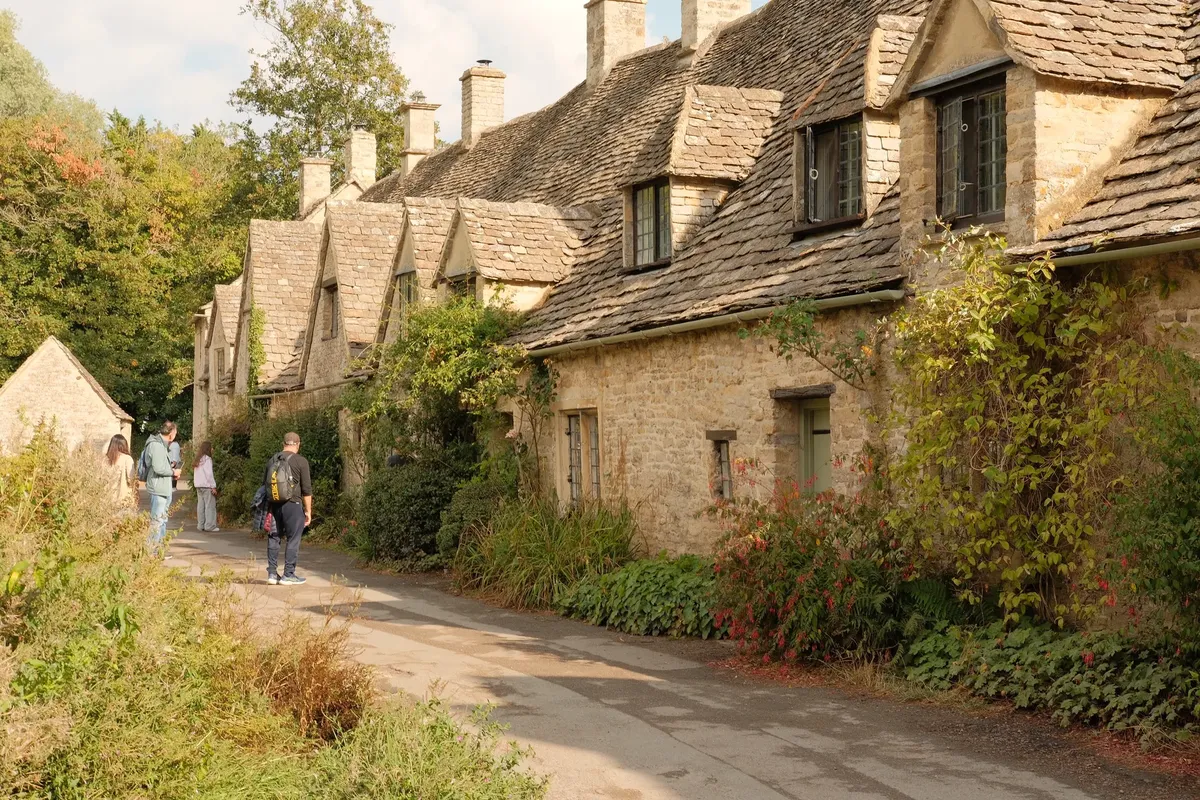
Walk the 93-mile (150 km) Cotswold Way, which runs from Bath to Chipping Campden.
I once stood looking at a crumbling stone boundary, realizing how much of the path was laid by hand. These trails serve as more than just walkways; they are corridors of heritage.
- Select a historical theme such as wool trade or Roman ruins.
- Map out the specific villages and landmarks to visit.
- Arrange transportation between the remote sites.
- In this order, the second step is the most extensive.
What are the best routes for a visit to Cotswolds history?
Setting out on a long-distance trek requires careful planning of the route. The Cotswold Way provides a structured way to experience the escarpment.
The Cotswold Way is a long-distance footpath, just over 100 miles (160 km) long, running the length of the AONB. It stays mainly on the edge of the Cotswold escarpment, offering views over the Severn Valley and the Vale of Evesham. This route allows for a deep immersion into the local geography.
What are the unique features of Cotswolds local sites?
A visitor might pause at a high ridge to take in the sweeping views of the valley below. Each site offers a different perspective on the region's character.
The landscape features numerous public walking trails and footpaths that attract visitors. One of the most notable is the 93-mile (150 km) Cotswold Way, which is part of the National Trails system. These paths provide a consistent way to experience the diverse scenery.
| Feature Type | Measurement |
|---|---|
| Total Area | Nearly 800 square miles (2,100 km2) |
| Farmland Percentage | Roughly 80 per cent |
The scale of the territory is vast, making it difficult to see everything in a single day. A limitation of any single trip is that the nearly 800 square miles (2,100 km2) of terrain cannot be fully covered in one go.

Wikipedia: London Based on the retained excerpt mentioning The London Natural History Society: The London Natural History Society suggests that London is "one of the World's Greenest Cities" with more than 40% green space or open water, 2000 species of flowering plant, and 120 species of fish.
The same subject is also called Cotswolds past sites.
The same subject is also called Visit Cotswolds history.
The same subject is also called Cotswolds region background.
This part also covers Day trip Cotswolds history.
This part also covers Cotswolds travel guide.
This part also covers Visit Cotswolds today.
Day trip Cotswolds history
Related




Comments 0